Latin America’s Unguarded Frontier: Espionage, Counterintelligence Failure, and the Geopolitical Vacuum of Intelligence Services in the Region (Volume 21, Issue 1)
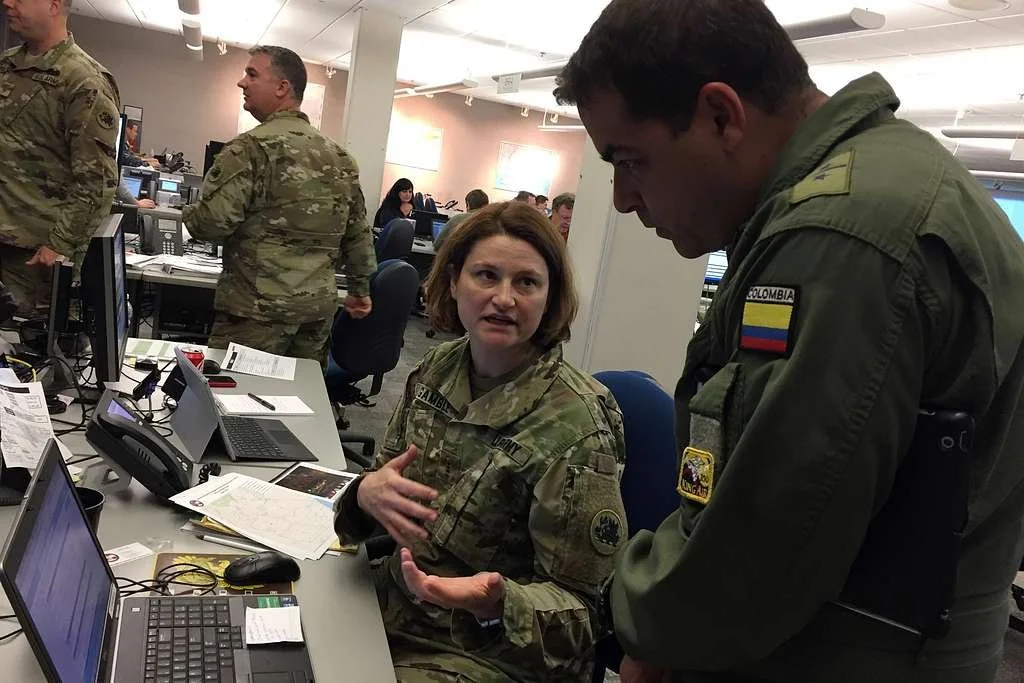
Colombian Air Force touring the United States Emergency Operations Center. Source: Defense Visual Information Distribution Service
By Jesús Napoleón Guerrero Ruíz
Introduction
Latin America has become the only region of significant geopolitical weight and state capacity that still lacks consolidated, professional, and autonomous intelligence services with external espionage and counterintelligence mandates—a gap repeatedly noted by scholars examining the evolution of intelligence institutions in the Global South. [1] Unlike Latin American states—whose intelligence systems remain largely reactive, internally oriented, and vulnerable to political influence—major global intelligence powers like the United States, the United Kingdom, France, and Israel operate professionalized agencies built on extensive human intelligence (HUMINT) networks, clandestine collection capabilities, and long-term strategic doctrines designed to shape international outcomes. The absence of professional intelligence institutions with clear mandates, protective counterintelligence structures, and autonomous strategic analysis has left Latin American states unusually susceptible to foreign espionage, the penetration of organized criminal networks, and discreet forms of external influence.
In the absence of cohesive national intelligence systems, the hemisphere has evolved into an unguarded frontier where cartels, rival governments, and transnational criminal organizations, including cross-border cartel networks, operate with relative freedom and limited state resistance. Understanding why the region never consolidated modern intelligence services, and how this vacuum reshapes the balance of power, is essential for explaining Latin America’s strategic vulnerability in the twenty-first century. Espionage, historically a silent yet indispensable instrument of statecraft—enabling states to anticipate threats, shape the behavior of rivals, and safeguard sovereignty—has become a missing institution in a region increasingly exposed to geopolitical competition and covert influence.
Theoretical Framework
Modern intelligence studies emphasize that espionage and counterintelligence are core instruments of state power, enabling governments to anticipate threats, shape the strategic environment, and prevent external penetration. Scholars such as Christopher Andrew and Calder Walton argue that states without professional intelligence services are structurally blind in geopolitical competition, since espionage provides the informational advantage necessary for both deterrence and autonomy. [2] At its core, espionage relies on HUMINT networks, covert collection, clandestine infiltration, and the continuous mapping of adversary intentions. Counterintelligence, in parallel, protects the state from hostile penetrations, covert influence, and the clandestine activities of foreign and domestic actors. It also protects it from internal penetration and psychological influence, forming what Mark M. Lowenthal describes as “the immune system of national security” in Intelligence: From Secrets to Policy. [3] When these two pillars are absent or dysfunctional, the state loses informational sovereignty and becomes permeable to external manipulation.
The absence of professional espionage and counterintelligence in Latin America is therefore not accidental—it is the product of historical legacies, institutional design failures, and conceptual misunderstandings about the nature of intelligence work. It is further reinforced by pervasive perceptions of governmental dysfunction, corruption, and limited state capacity, which have long discouraged the creation of autonomous intelligence institutions in the region.
In global practice, modern intelligence services such as the CIA, MI6, Mossad, or DGSE operate under unified doctrines, professional career systems, strict compartmentalization, and long-term strategic mandates. Their institutional architecture combines offensive espionage, defensive counterintelligence, covert action, liaison diplomacy, and intelligence fusion. As Amy B. Zegart demonstrates in Eyes on Spies: Congress and the United States Intelligence Community, these institutions are neither accidental nor improvised; they emerge from deliberate state-building processes, bureaucratic specialization, and geopolitical necessity. [4] Espionage, therefore, is not an auxiliary activity but a defining feature of modern statehood. This theoretical perspective highlights a crucial contrast: in Latin America, intelligence institutions historically developed as tools of domestic political control rather than instruments of strategic statecraft. Instead of building professional espionage agencies to protect sovereignty, many Latin American governments constructed secret police systems aimed at monitoring opposition, suppressing dissent, or serving regime survival. [5] This divergence explains why the region possesses extensive security bureaucracies but not modern, professional intelligence services with external espionage and counterintelligence mandates.
The absence of a strategic intelligence doctrine in Latin America also stems from the region’s geopolitical position. Without sustained external wars or global power ambitions, governments deprioritized espionage as a tool of statecraft. However, the twenty-first century reversed this assumption. Although Latin America has long confronted criminal networks and foreign covert operations, the twenty-first century has seen these actors expand in scale, autonomy, and geopolitical relevance, thereby making intelligence and counterintelligence central variables of regional security.
Rather than entering the twenty-first century with a new institutional landscape, Latin America inherited intelligence structures shaped by Cold War political policing, foreign covert operations, and the emergence of powerful criminal organizations—institutions that proved ill-suited for modern intelligence requirements and left states reliant on fragmented agencies, militarized security forces, and reactive counter-crime approaches. As a result, the region lacks the institutional immune system needed to counter foreign espionage, cartel infiltration, or covert influence in electoral, military, and economic domains. This gap between established intelligence doctrines and Latin America’s institutional reality helps explain the structural vulnerability that shapes the region’s geopolitical condition today.
The historical roots of Latin America’s intelligence deficit can be traced to the Cold War, when the region’s security and intelligence institutions were shaped not by concerns over external sovereignty but by the geopolitical logic of U.S.–Soviet competition, which oriented espionage toward monitoring internal enemies. Instead of building professional intelligence services focused on external threats, many governments adopted a national security paradigm that equated intelligence with domestic surveillance and political repression. Agencies such as Argentina’s Secretaría de Inteligencia del Estado (SIDE), Chile’s Dirección de Inteligencia Nacional (DINA), and various military intelligence units in Brazil and Central America were structured as political police rather than as state intelligence services. Their purpose was domestic surveillance, not external espionage, strategic warning, or protection from foreign infiltration. In Spies: The Epic Intelligence War Between East and West, Calder Walton argues that regions emerging from authoritarian security doctrines face an “inherited intelligence dysfunction,” where secrecy and coercion replace professionalism and analytical capacity. [6] Latin America exemplifies this pattern.
With democratic transitions in the late twentieth century, the region dismantled or weakened its Cold War intelligence structures but failed to replace them with modern agencies. New democracies, fearing the return of authoritarian practices, restricted the scope of intelligence operations and avoided developing offensive espionage capabilities and strong counterintelligence mandates. As Juan Gabriel Tokatlian notes in Globalización, narcotráfico y violencia, the region chose democratization without intelligence reform, leaving states with bureaucracies that neither repressed as before nor protected as they should. [7] The result was a vacuum: no professional spy services, no counterintelligence culture, and no strategic doctrine. In contrast, global powers reformed and modernized their agencies after 1991, adapting to post-Cold War threats, terrorism, cyber operations, and renewed great-power competition.
At the same time, several Latin American states increasingly relied on what scholars describe as a “law-enforcement mindset”: a tendency to confront transnational threats primarily through policing and criminal-justice instruments rather than intelligence-led strategies. [8] Yet espionage and counterintelligence are not police functions. They require clandestine methods, covert recruitment, deception operations, long-term penetrations, strategic analysis, and—in modern intelligence systems—participation in structured international cooperation networks such as the Five Eyes alliance, which have no equivalent in Latin America.
The region’s failure to internalize this distinction left its states unable to detect foreign intelligence activities or anticipate covert influence operations—a vulnerability illustrated by long-standing Iranian and Hezbollah-linked networks in the Southern Cone and by the 2014 exposure of Colombian intelligence activity inside Venezuela, cases that preview the structural weaknesses examined in later sections of this article. As Thomas Rid emphasizes in Active Measures: The Secret History of Disinformation and Political Warfare, modern conflict is increasingly invisible, deniable, and intelligence-driven; states without espionage capabilities become spectators in their own geopolitical arena, a pattern reflected in episodes such as the inability of several South American governments to detect early Venezuelan intelligence penetration during the 2000s or Mexico’s failure to anticipate the consolidation of cartel-based espionage structures. [9]
This theoretical background reveals a structural paradox: Latin America democratized its politics, but not its intelligence. It abandoned authoritarian secret police institutions, yet did not replace them with intelligence services embedded in democratic governance frameworks—agencies with clear legal mandates, civilian oversight, and parliamentary review mechanisms similar to those that structure modern services, such as MI6 or the CIA. Meanwhile, organized crime, unlike the state, does practice espionage, developing its own human intelligence networks, infiltration methods, and surveillance capabilities. This legacy shapes the region’s contemporary vulnerabilities and helps explain the strategic vacuum that foreign and non-state actors exploit today.
Methodology
This article adopts a Most Similar Systems Design (MSSD) to examine why Latin America, despite sharing democratic frameworks, presidential systems, and chronic exposure to transnational threats, has failed to consolidate modern intelligence services capable of conducting offensive espionage and effective counterintelligence. The cases selected—Argentina, Mexico, and Colombia—share structural similarities: all are large or medium-sized states, all underwent democratic transitions, and all confront foreign interference, organized crime, and geopolitical vulnerability. Yet across these similar conditions, none has developed intelligence institutions comparable to their western counterparts. By holding regime type, regional context, and threat environment constant, the MSSD approach helps isolate the causal mechanism that explains the regional intelligence vacuum: the absence of institutionalized HUMINT doctrine, professional counterintelligence, and autonomous espionage-oriented agencies. Following Przeworski and Teune’s comparative logic, the goal is not to narrate events, but to identify structural causes embedded in institutional design and historical legacies.
Analysis
The Argentine case illustrates the persistence of intelligence dysfunction rooted in Cold War legacies and the absence of essential intelligence capabilities. Argentina never developed an external clandestine collection service, a protected counterintelligence structure, or long-term HUMINT recruitment systems. Its transition from the SIDE to the Agencia Federal de Inteligencia (AFI) occurred without doctrinal reform, career restructuring, or the creation of specialized units for foreign espionage. As documented by scholars Sabina Frederic and Marcelo Sain, SIDE and AFI remained oriented toward domestic surveillance, judicial manipulation, and political monitoring rather than clandestine operations abroad. [10] Argentina lacks the basic components of a modern intelligence service: an external clandestine operations directorate, an autonomous counterintelligence entity capable of detecting penetrations, a professional HUMINT pipeline, and a strategic analysis unit focused on extra-regional threats. Scholar of intelligence Christopher Andrew describes states without such HUMINT cultures as suffering from “strategic blindness,” a condition that fits Argentina precisely: it possesses the form of an intelligence institution, but not its core functions. [11]
Mexico illustrates a different pathway to the same structural failure. Despite confronting some of the world’s most capable criminal organizations, Mexico has no autonomous counterintelligence agency, no national clandestine collection service, no secure communications architecture insulated from cartel penetration, and no sustained recruitment or training programs for intelligence personnel. As analyses by Edgardo Buscaglia, Alejandro Hope, and the U.S. Congressional Research Service show, the former CISEN (Centro de Investigación y Seguridad Nacional) and the current CNI (Centro Nacional de Inteligencia) have focused on domestic political surveillance rather than intelligence-led operations against foreign actors or transnational criminal networks. [12] Meanwhile, cartel intelligence structures—built on informant cultivation, intercepted communications, institutional infiltration, and localized HUMINT networks—now surpass state capacity. Caldor Walton argues that when non-state actors acquire superior intelligence capabilities, the state loses not only territorial control but sovereignty itself, a dynamic increasingly visible in Mexico. [13]
Colombia presents a more sophisticated intelligence tradition but converges on the same structural outcome. Years of internal conflict produced advanced tactical intelligence capabilities, yet these were never transformed into a modern strategic intelligence system geared toward foreign threats, external espionage, or covert geopolitical competition. Colombian agencies lack an external espionage directorate, independent counterintelligence structures, long-term clandestine recruitment programs, and intelligence fusion centers with extra-regional mandates. As Juan Gabriel Tokatlian explains, Colombian intelligence was designed for internal war rather than geostrategic competition. [14] After the 2016 peace agreement and the demobilization of the Fuerzas Armadas Revolucionarias de Colombia (FARC), an insurgent organization founded in the 1960s, the state failed to redefine intelligence functions for a post-conflict environment. This left openings that foreign intelligence services, regional competitors, and transnational actors have increasingly exploited.
Across all three cases, the pattern is consistent: intelligence bureaucracies exist, but the core capabilities of intelligence statecraft do not. None of the countries studied have institutionalized the doctrinal coherence, operational autonomy, career systems, or strategic missions that Amy Zegart identifies as foundational to a functional intelligence system. [15] These missing capabilities map directly onto the vulnerabilities described earlier: Argentina’s susceptibility to foreign penetrations, Mexico’s inability to counter cartel intelligence, and Colombia’s difficulty anticipating covert external influence.
Extra-hemispheric powers have exploited this capability deficit. U.S., Russian, Chinese, and Iranian intelligence networks maintain collection platforms, liaison channels, and influence operations across the region that far exceed local capacity. [16] Recent assessments on the governance of disinformation in Latin America underscore similar vulnerabilities, noting widespread exposure to covert influence and limited institutional safeguards against informational manipulation. [17] Meanwhile, organized crime conducts espionage more effectively than the state, employing informant networks, institutional infiltration, and intelligence-led violence. The irony is stark: in Latin America, non-state actors and foreign governments possess intelligence systems while the Latin American states themselves do not.
Discussion
This structural intelligence deficit produces distinct geopolitical risks across the region. First, Latin America functions as an open field for foreign espionage, but the consequences vary by country. In Argentina, the absence of an external clandestine collection service and a protected counterintelligence agency has allowed external actors to maintain footholds with minimal resistance. China’s intelligence-linked activity through port concessions and telecommunications infrastructure has raised concerns among regional analysts, while Iranian and Hezbollah-linked networks in the Tri-Border Area have operated for decades with limited state disruption. [18] In Mexico, weak counterintelligence and the absence of secure communications architecture have facilitated foreign penetration through commercial fronts, liaison channels, and technology agreements. Colombia, despite its operational experience, has struggled to detect Venezuelan intelligence activity along its borders and inside political institutions, a vulnerability highlighted by public scandals in the early 2000s and 2010s. [19] In classical geopolitical terms, Latin America is a contested intelligence frontier—but one where local states do not possess the institutional tools necessary to shape outcomes. As Calder Walton notes, “in a world of silent wars, absence is not neutrality—it is defeat.” [20]
Second, the intelligence vacuum empowers organized crime and hybrid actors, but again in country-specific ways. In Mexico, cartel intelligence structures—built on surveillance teams, infiltration of police units, paid informants, and communications interception—have often outperformed state agencies. [21] In Colombia, post-demobilization criminal groups that evolved from paramilitary structures—commonly referred to as “bacrim,” short for bandas criminales in Spanish—use human intelligence, territorial mapping, and institutional infiltration to maintain control. These examples illustrate Christopher Andrew’s observation that sovereignty depends on informational supremacy: when criminal groups gain superior intelligence, they acquire autonomy, territorial governance capacity, and leverage over state institutions. [22]
Third, democratic institutions become exposed to covert influence, but these vulnerabilities vary in form rather than reflecting a uniform regional condition. In Argentina, political surveillance scandals involving intelligence actors have undermined judicial independence and electoral trust. [23] In Mexico, limited counterintelligence has facilitated the penetration of municipal governments by cartels and has exposed political parties to coercion and infiltration. In Colombia, foreign operations—ranging from influence campaigns linked to Venezuela to targeted disinformation during electoral cycles—have affected public perception and institutional credibility. These risks do not derive solely from weak counterintelligence; they emerge from the broader institutional ecosystem, where political finance, cybersecurity, electoral regulation, and intelligence oversight intersect. Without counterintelligence, however, states lack the capacity to detect and attribute covert influence operations—an essential step for prevention, accountability, and democratic resilience. Documented episodes of targeted disinformation campaigns during electoral cycles in Brazil, Mexico, and Colombia demonstrate how covert influence can reshape legitimacy, alter political alignments, and erode democratic consolidation. [24] Intelligence, therefore, is not merely a security instrument but a prerequisite for democracy.
The region’s vulnerability is ultimately institutional rather than technological. Building modern intelligence services requires doctrine, mission clarity, compartmentalization, clandestine training, professionalized recruitment, protected budgets, parliamentary oversight, and long-term strategic mandates. As Amy Zegart argues, intelligence reform is state-building, not improvisation. [25] For Latin America, closing the geopolitical gap requires the construction of autonomous intelligence institutions oriented toward external espionage and counterintelligence and embedded in democratic oversight frameworks. Without these reforms, the region will remain dependent on foreign intelligence services and vulnerable to criminal intelligence penetration.
Developing these institutions demands comprehensive reform rather than incremental adjustments. States must establish autonomous agencies with external mandates; professionalize HUMINT and counterintelligence through specialized career paths and clandestine training programs; adopt legal frameworks regulating covert action and mandating interagency fusion; secure multi-year budgets insulated from political turnover; and strengthen regional cooperation through an early-warning architecture modeled on scaled-down principles of the Five Eyes alliance. Equally important is investing in civilian expertise—through university programs, technical institutes, and parliamentary advisory bodies—to ensure that intelligence strategy is shaped by democratic institutions rather than military factions or foreign services. Only by undertaking these steps can Latin America reduce strategic vulnerability and reclaim informational sovereignty in an era defined by covert competition.
About the author
Jesús Napoleón Guerrero Ruiz is an Ecuadorian researcher specializing in intelligence studies, state capacity, and democratic security governance in Latin America. He holds bachelor’s degrees in Political Science and International Relations, an MBA earned with academic distinction, and is currently studying Law at Universidad San Francisco de Quito while pursuing a research master’s in Law & Society at Universidad Andina Simón Bolívar.
Endnotes
[1] Christopher Andrew, The Secret World: A History of Intelligence (New Haven: Yale University Press, 2018);
Amy Zegart, Spies, Lies, and Algorithms: The History and Future of American Intelligence (Princeton: Princeton University Press, 2022);
Eugenio Diniz, “The International Context and Resumption of the Debate on Development in Contemporary Brazil (2000-2010),” Revista Dados vol. 54, no. 4, 2011.
[2] Christopher Andrew. The Secret World: A History of Intelligence. New Haven: Yale University Press, 2018;
Calder Walton, Spies: The Epic Intelligence War Between East and West (New York: Simon & Schuster, 2021).
[3] Mark M. Lowenthal, Intelligence: From Secrets to Policy (Washington, D.C.: CQ Press, 2023).
[4] Amy B. Zegart, Eyes on Spies: Congress and the United States Intelligence Community (Stanford: Hoover Institution Press, 2011).
[5] Eugenio Diniz, “The International Context and Resumption of the Debate on Development in Contemporary Brazil (2000-2010),” Revista Dados vol. 54, no. 4, 2011.
[6] Calder Walton, Spies: The Epic Intelligence War Between East and West (New York: Simon & Schuster, 2021).
[7] Juan Gabriel Tokatlian, Globalización, crimen y guerra (Buenos Aires: Siglo XXI, 2020).
[8] Ibid.
[9] Thomas Rid, Active Measures: The Secret History of Disinformation and Political Warfare (New York: Farrar, Straus and Giroux, 2020).
[10] Sabina Frederic, Los usos de la fuerza: Policía y militares en la Argentina (Buenos Aires: Siglo XXI, 2013);
Marcelo Sain, La Casa que no Cesó: Historia Crítica de la Secretaría de Inteligencia del Estado (Buenos Aires: Siglo XXI, 2020).
[11] Christopher Andrew, The Secret World: A History of Intelligence (New Haven: Yale University Press, 2018).
[12] Edgardo Buscaglia, Vacíos de poder en México: Cómo combatir la delincuencia organizada (México DF: Debate, 2013);
Alejandro Hope, Plus ça change: Structural Continuities in Mexican Counternarcotics Policy (Washington, D.C.: Brookings Institution, Center for 21st Century Security and Intelligence, Latin America Initiative, 2016);
Congressional Research Service, Mexico: Organized Crime and Drug Trafficking Organizations, CRS Report R41576 (Washington, D.C., updated 2020).
[13] Calder Walton, Spies: The Epic Intelligence War Between East and West (New York: Simon & Schuster, 2021).
[14] Juan Gabriel Tokatlian, Globalización, narcotráfico y violencia: Siete ensayos sobre Colombia (Buenos Aires/Santafé de Bogotá: Editorial Norma, 2000).
[15] Amy B. Zegart, Eyes on Spies: Congress and the United States Intelligence Community (Stanford: Hoover Institution Press, 2011).
[16] R. Evan Ellis, China’s Engagement with Latin America and the Caribbean: Implications for the United States (Washington, D.C.: U.S.–China Economic and Security Review Commission, 2018);
Juan Gabriel Tokatlian, Globalización, narcotráfico y violencia: Siete ensayos sobre Colombia (Buenos Aires/Santafé de Bogotá: Editorial Norma, 2000).
Harold A. Trinkunas, Renminbi Diplomacy? The Limits of China’s Influence on Latin America’s Domestic Politics (Washington, D.C.: Brookings Institution, 2016).
[17] Andrés Cañizález and Mariela Torrealba, Informe sobre regulación de la desinformación en países de Latinoamérica (Caracas: LatamChequea / Unión Europea, June 23, 2025).
[18] Matthew Levitt, Hezbollah: The Global Footprint of Lebanon’s Party of God (Washington, D.C.: Georgetown University Press, 2013).
[19] Juan Gabriel Tokatlian, Globalización, narcotráfico y violencia: Siete ensayos sobre Colombia (Buenos Aires/Santafé de Bogotá: Editorial Norma, 2000).
[20] Calder Walton, Spies: The Epic Intelligence War Between East and West (New York: Simon & Schuster, 2021).
[21] Edgardo Buscaglia, Vacíos de poder en México: Cómo combatir la delincuencia organizada (México DF: Debate, 2013);
Alejandro Hope, Plus ça change: Structural Continuities in Mexican Counternarcotics Policy (Washington, D.C.: Brookings Institution, Center for 21st Century Security and Intelligence, Latin America Initiative, 2016).
[22] Christopher Andrew, The Secret World: A History of Intelligence (New Haven: Yale University Press, 2018);
Amy Zegart, Spies, Lies, and Algorithms: The History and Future of American Intelligence (Princeton: Princeton University Press, 2022).
[23] Marcelo Sain, La Casa que no Cesó: Historia Crítica de la Secretaría de Inteligencia del Estado (Buenos Aires: Siglo XXI, 2020).
[24] Daniel Arnaudo, Computational Propaganda in Brazil: Social Bots during Elections (Oxford: Oxford Internet Institute, 2017).
[25] Amy Zegart, Spies, Lies, and Algorithms: The History and Future of American Intelligence (Princeton: Princeton University Press, 2022).
Disclaimer
The views expressed in this paper are solely those of the author and do not reflect the opinions of the editors or the journal.