
By Matthew J. Klem
Rick Steves, celebrated travel author and host of Rick Steves Europe, explains the way travel can shape our attitudes toward global affairs, and how travel in Europe shaped his own reflections on American politics.
Read MoreBy Matthew J. Klem
Rick Steves, celebrated travel author and host of Rick Steves Europe, explains the way travel can shape our attitudes toward global affairs, and how travel in Europe shaped his own reflections on American politics.
Read MoreBy Pat Wiedorn
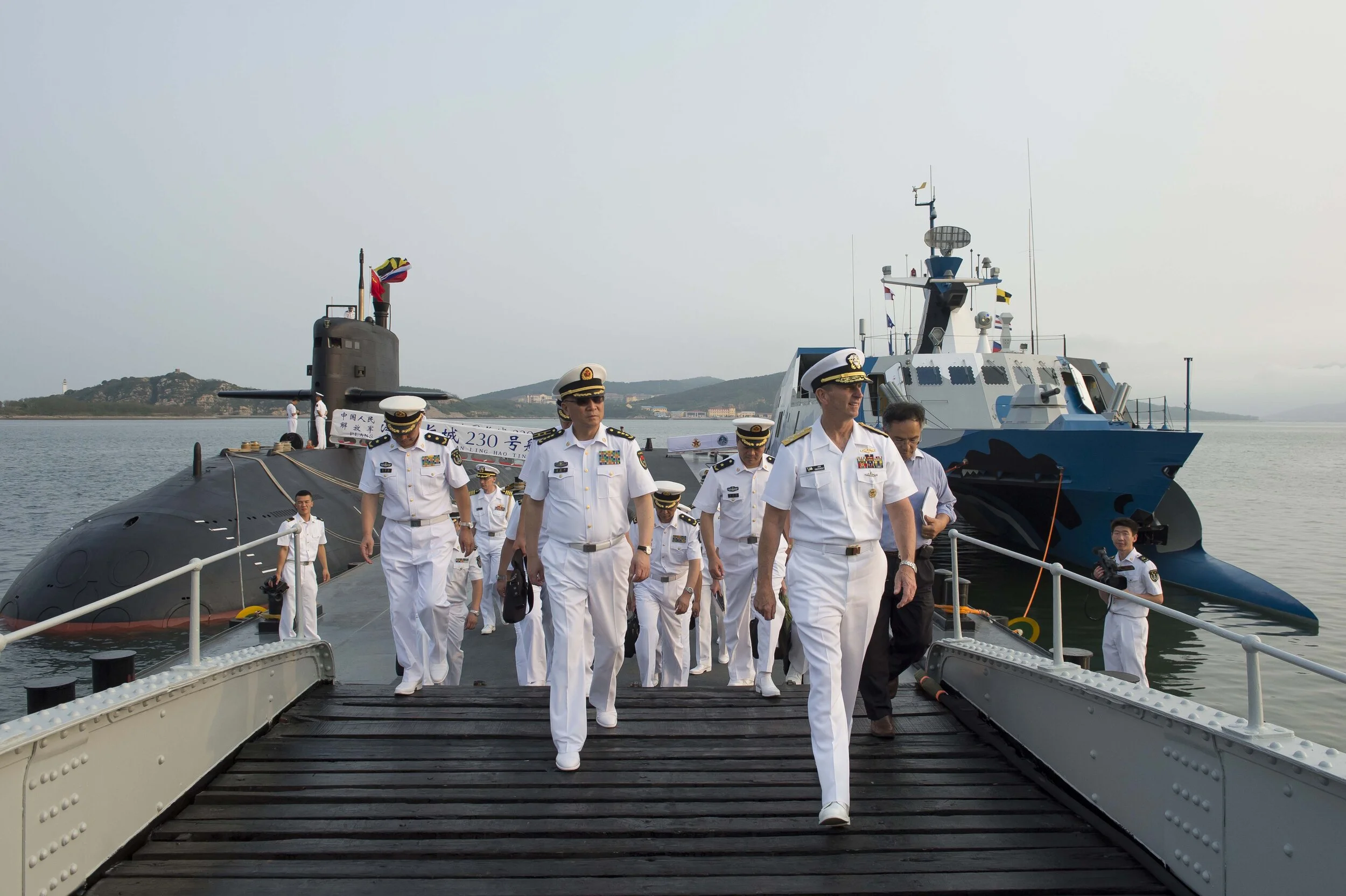
In recent decades, China has worked to develop the capability to exercise full military control over its near seas. During an invasion of Taiwan, this capability would be used to deny enemies the ability to deploy troops or ships to the area. To counter this threat the United States needs a larger number of smaller, mission-focused submarines.
Read MoreBy Eliot Pence
Despite some economic progress, Colombia still faces critical challenges in managing its borders and countering illicit drug production. The U.S. should consider leveraging the next generation technologies to promote an effective partnership with Colombia.
Read MoreBy Ryan Nabil
The UK's potential trade agreement with the US should not hinder Britain’s trade with other major economies like China.
Read MoreBy Jason Lapadula
“We’ve gone into an experimental context on the most vulnerable people in the world, and put them in a commodification posture where we’re monetizing and trading their data.”
Read MoreBy Rema Rajeshwari
I assumed the post of District Police Chief of Jogulamba Gadwal, a rural district in the central Indian state of Telangana, in the summer of 2018.
Read MoreBy Faisal Magray
Freelance journalist Faisal Magray sheds light onto the personal stories of people living in one of Kashmir’s remaining leper colonies.
Read MoreBy Nicolai N. Petro
Religious conflict in Ukraine has been much in the news of late, ever since President Petro Poroshenko very publicly embraced the ambitious idea of creating a single, unified Orthodox Christian church out of the country’s many Orthodox denominations. This idea, long dear to the hearts of Ukrainian nationalists, kept the issue on the front pages of the media in Ukraine, Russia, and other predominantly Orthodox countries for most of 2018.
Read MoreBy Matthew Burnett
2014 was the worst year of the most devastating Ebola outbreak, in one of the three worst affected countries. Nonetheless, it killed fewer people than malaria, maternal and neonatal disorders, and lower respiratory infections, and around the same number as diarrheal diseases. In an environment of constrained funding, it is essential to deliver the best value for money, extracting the most benefit from each dollar spent.
Read MoreBy Meg King & Jake Rosen
In a process rife with uncertainty and at times high with tension, the United States, Canada, and Mexico managed to reach terms for a broad new trade arrangement to replace NAFTA.
Read MoreBy Łukasz Antoni Król
Establishing norms could be a much more effective strategy than arms control agreements in limiting the spread of digital weapons.
Read MoreBy Erik Woodward
The low-lying atoll nations of the South Pacific Ocean are sinking. An interpretation of international law suggests that a deterritorialized state could be a legally permissible international entity.
Read MoreBy Joe Kyle
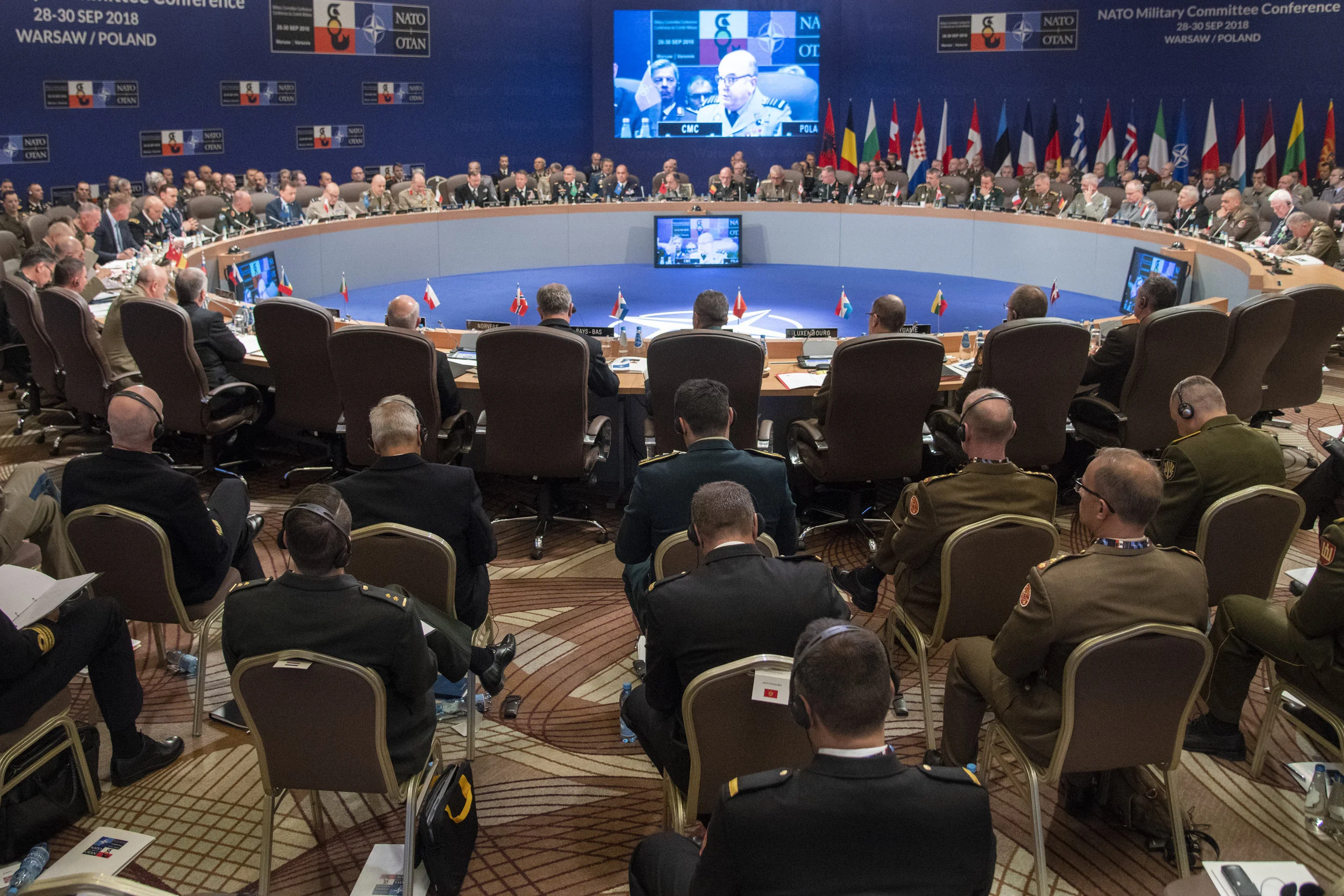
As the preeminent institution for maintaining European security, the North Atlantic Treaty Organization (NATO) must address the growing sphere of Russian influence in non-NATO member states.
Read Moreby Christian Marin
Andrés Manuel Lopez Obrador (AMLO) will soon become the most legitimate president in the history of Mexico after winning the presidential election by more than doubling the runner up’s votes.
Read MoreBy Douglas Gledhill
Since 2016, we’ve seen a wave of populist declarations of dissatisfaction with the global trading system.
Read MoreBy Sir Roderic Lyne
As Putin enters his next six-year stretch (which will be punctuated, mid-term, by Duma elections in 2021), two related questions will arise. First, can Putin – a man who trusts few people — develop a successor from the next generation who is strong enough to control Russia’s baronies, and whom he can trust to protect him, his family, his associates, and their vast wealth? Second, what will Putin seek to achieve in possibly his last term in office?
Read MoreBy Loren Voss
There is a startling similarity across the globe in the language politicians and media organizations use to describe people fleeing for their lives. In response to a growing number of desperate and displaced people, the rhetoric coming from governments and newspapers is largely the same—these “others” threaten our beloved nation—letting them in would destroy its very foundation.
Read MoreBy Amy Fallas
During an address delivered to attendees of the World Summit in Defense of Persecuted Christians in May 2017, Vice President Mike Pence declared that “no people of faith today face greater hostilities or hatred like those who follow Christ.”
Read MoreBy Ellen Chapin
As Syria burns, China rises, and North Korea threatens with its nuclear arsenal, U.S. national security experts have been forced to lurch from crisis to crisis, without any time to step back and look at America’s role in the global world order. In his new book, Preventative Engagement, Council on Foreign Relations fellow Paul Stares identifies that the U.S. government’s lack of long-term strategy has become a crisis of its own.
Read MoreBy Julia Snitsky
Serhii Plokhy, an eminent historian of Early and Modern Ukraine, starts Lost Kingdom with an anecdote about the opening of one of Moscow’s largest statues, that of Vladimir the Great, unveiled in November 2016 by Russian President Vladimir Putin.
Read More