Schools as Frontiers of Peace: Child Recruitment, Organized Crime, and the Limits of Citizen Security in Latin America (Volume 21, Issue 2)
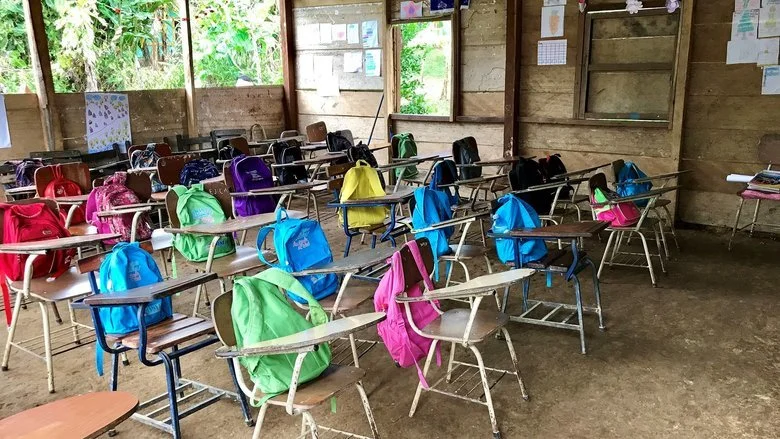
Rural school in Latin America. Source: World Bank
By Dayana León
Introduction: Child Recruitment as a Regional Security Challenge
Over the past decade, Latin America has undergone a profound transformation in its patterns of violence. While conventional armed conflicts are not common, the region is home to some of the world’s highest rates of homicide, urban armed violence, and organized crime. It is under these circumstances that children and adolescents have become prime targets for criminal organizations seeking to consolidate territorial control, sustain illicit economies, and reproduce violence across generations.
In Ecuador, this transformation has been particularly acute. Since 2019, the country has experienced a rapid escalation of criminal violence linked to the fragmentation of organized crime, the collapse of the penitentiary system, and Ecuador’s strategic role in global drug trafficking routes. Between 2019 and 2022, intentional homicides of children and adolescents increased by more than 640 percent, with firearms used in nearly nine out of ten cases. [1] By 2024, minors accounted for more than half of all homicide victims nationwide, most of them between fifteen and seventeen years of age.
These figures are not merely indicators of insecurity; they reveal a deeper structural problem. The recruitment and use of children and adolescents by criminal groups—whether through coercion, manipulation, or gradual socialization—has become a central mechanism to both reproduce and normalize violence. Recruitment is not an isolated phenomenon affecting only a small subset of youth, but rather one that is embedded in everyday social relations, schools, neighborhoods, and digital spaces.
The recruitment of children and adolescents by criminal actors in Latin America constitutes one of the most significant obstacles to peacebuilding and citizen security. Addressing it requires integrated public policies that move beyond punitive approaches and recognize schools and educational communities as strategic frontiers for prevention, protection, and the reconstruction of social cohesion.
From Youth Gangs to Organized Crime: Structural Shifts in Recruitment
Historically, youth involvement in crime in Ecuador, and across Latin America more generally, was associated with localized gangs that provided a sense of belonging, identity, and protection in contexts of exclusion. These groups operated primarily at the neighborhood level and were often disconnected from transnational criminal economies. This landscape has changed dramatically in recent years.
Since 2019, Ecuador has witnessed the emergence and consolidation of highly violent criminal structures with transnational connections, including links to drug trafficking networks in Colombia, Peru, and beyond, as well as to criminal markets in the United States and the European Union. These organizations rely on flexible, expendable human capital, making children and adolescents strategically valuable actors. [2]
Recruitment is no longer episodic or exceptional; it is systemic. Organized crime groups strategically utilize children in their operations, from surveillance and drug distribution to extortion and, in some cases, contract killings. Most recruitment occurs through peer networks and family ties, offering economic incentives and symbolic rewards such as status, protection, and belonging. [3]
This shift challenges conventional legal and security frameworks that conceptualize recruitment primarily as a coercive act. It also complicates policy responses, as many adolescents occupy an ambiguous position between victimhood and agency—an ambiguity that punitive systems are ill-equipped to address.
Recruitment as Socialization: Criminal Linkage and Subcultural Dynamics
Recent research increasingly conceptualizes child recruitment not as a discrete or exceptional event but as a process of criminal linkage—a gradual and relational incorporation into illicit structures shaped by social proximity, territorial control, and symbolic rewards. From a criminological standpoint, this process closely resembles what subcultural theories describe as socialization into alternative normative systems that emerge in response to structural exclusion, blocked opportunities, and institutional failure. [4] Recruitment, in this sense, is less about overt coercion than about the normalization of criminal affiliation as a viable pathway for survival and recognition.
This process unfolds within what Ulrich Beck, a sociologist and author of Risk Society: Towards a New Modernity, characterizes as a risk society, one in which institutions systematically fail to anticipate and mitigate socially produced risks, instead transferring the burden of risk management to individuals and communities. [5] In high-violence urban contexts, where insecurity is normalized as an everyday condition, children and adolescents are often compelled to seek viable alternatives to criminal involvement, particularly in the absence of effective institutional protection and social opportunities. Recruitment thus becomes a predictable outcome of institutional absence; in this context, the role of the state is key to curtailing it through sustained investment in social prevention.
In Ecuadorian cities such as Guayaquil, Durán, and Esmeraldas, children grow up in environments where criminal organizations exercise de facto governance over neighborhoods marked by chronic state retreat. These groups regulate mobility, impose informal rules, mediate disputes, and provide economic opportunities in ways that shape everyday social life. Under such conditions, recruitment is a normalized extension of daily interaction.
More recently, recruitment processes have increasingly expanded into digital spaces, amplifying their reach and subtlety. As documented by InSight Crime, criminal groups across Latin America now rely extensively on social media and messaging platforms to identify, groom, and contact minors, often blending entertainment, aspirational imagery, and peer validation with gradual normalization of criminal roles. [6] Digital recruitment reduces exposure for recruiters, circumvents territorial boundaries, and exploits adolescents’ online social networks, making recruitment both less visible and more difficult to regulate through traditional law enforcement strategies.
Child recruitment in Ecuador is not primarily a problem of individual deviance or criminal manipulation but a structural outcome of social exclusion, digital vulnerability, and institutional fragility. As social protection systems are dismantled, the state increasingly relies on penal management to address social insecurity, a process that simultaneously marginalizes and criminalizes young people. [7] In Ecuador, adolescents recruited by organized crime frequently encounter the state first through policing, surveillance, or detention rather than through schools, social services, or child protection systems. Such encounters reinforce mistrust, stigmatization, and institutional distance, making disengagement from criminal structures increasingly difficult. Social media plays an increasingly prominent role in recruitment. Platforms such as WhatsApp (31% of cases) and Facebook (27% of cases) serve as key initial contact channels, particularly in urban areas where violence constrains physical mobility. [8] These rapidly evolving developments challenge policy approaches that fail to disrupt focus narrowly on identifying individual recruiters rather than disrupting the broader social and digital ecosystems that enable criminal recruitment.
Schools as Contested Territories
Schools occupy a profoundly paradoxical position in contexts of criminal violence. On the one hand, they are among the most significant protective institutions in the lives of children and adolescents, providing not only education but also structure, socialization, and access to public services. On the other hand, in territories affected by organized crime, schools are increasingly exposed to the same dynamics of intimidation, territorial control, and coercion that shape surrounding neighborhoods. Far from being insulated from violence, educational institutions often become contested spaces, where the authority of the state competes directly with criminal governance.
Recruitment thrives in places where schools fail to function as protective environments and where community ties are fractured by violence and poverty. [9] Addressing recruitment, therefore, requires repositioning schools and educational communities not only as sites of learning but as strategic nodes of prevention, early warning, and social reintegration.
In Ecuador, empirical evidence illustrates the depth of this tension. Adolescents report threats, extortion, drug dealing, and armed confrontations in or around schools, particularly in urban areas with high levels of organized crime. These conditions are not merely incidental; they actively contribute to school dropout, one of the most robust predictors of vulnerability to recruitment by criminal organizations.
This pattern is consistent with regional trends. UNICEF’s analysis of armed and urban violence in Latin America demonstrates that disengagement from education significantly increases children’s exposure to criminal recruitment, while sustained school attachment remains one of the strongest protective factors against involvement in violence. [10] Several recent case studies illustrate both the risks faced by schools and their potential role in prevention. At the regional level, UNICEF’s Global Initiative to Make Schools Safe underscores that schools located in violent environments frequently become places of recruitment and coercion, particularly in places where broader community protection systems have collapsed. [11] The initiative emphasizes that school safety cannot be reduced to physical security measures alone, but rather requires integrated strategies that link education, child protection, psychosocial support, and community engagement. Addressing recruitment, therefore, requires repositioning schools and educational communities not only as sites of learning but as strategic nodes of prevention, early warning, and social reintegration.
In Ecuador, emerging policy responses reflect this shift toward a more comprehensive understanding of school safety. The Communities of Safe and Protective Education Program, led by the Ministry of Education, seeks to strengthen schools as spaces of prevention by integrating protocols for risk detection, psychosocial support, and coordination with local authorities and community actors. [12] Rather than treating schools solely as sites requiring policing, the program frames them as hubs for early warning, social cohesion, and child protection.
Legal and policy frameworks have also evolved. Recent guidelines approved through Ecuador’s official legal registry establish clearer mandates for implementing a national strategy against child recruitment, including preventive actions within educational settings, as well as mechanisms for inter-institutional coordination. [13] Taken together, these findings underscore a critical insight: schools in violent contexts are not neutral spaces. They are arenas where competing forms of authority, legitimacy, and socialization intersect. Reframing schools as frontiers of peace requires moving beyond reactive or militarized responses and investing instead in their capacity to function as protective, inclusive, and resilient institutions.
Ultimately, protecting schools is not only an educational imperative but a strategic investment in peacebuilding and citizen security. In regions where organized crime seeks to capture the socialization of the next generation, safeguarding educational spaces becomes a frontline defense against the reproduction of violence across generations.
The Limits of Punitive and Militarized Responses
Faced with escalating violence, many governments in Latin America have turned to punitive and militarized strategies, including harsher sentencing, expanded police presence, and emergency security measures. While these approaches may yield short-term reductions in visible violence, their impact on child recruitment is limited and often counterproductive. Incarceration and punitive justice do little to disrupt the social and economic conditions that make recruitment attractive. Without parallel investments in education, social protection, and community resilience, enforcement-heavy strategies merely displace violence temporally or geographically.
Although Ecuador’s Código Orgánico Integral Penal (COIP) criminalizes the recruitment of children and adolescents, persistent violence against minors exposes the limits of legal formalism in the absence of effective protection. [14] More than 11,000 crimes against children and adolescents are reported annually, yet only a small fraction result in convictions. [15] This enforcement gap reveals a structural disconnect between normative frameworks and institutional capacity, undermining public trust and reinforcing cycles of vulnerability among youth exposed to coercion, violence, and recruitment pressures.
In response, the Ecuadorian government has advanced both policy and legislative initiatives. The 2025 Estrategia Emergente para la Prevención del Reclutamiento de Niños, Niñas y Adolescentes frames recruitment as a priority state concern and proposes a comprehensive, interinstitutional preventive approach. [16] Additionally, in 2026, the Executive submitted a draft Organic Reform Law to strengthen sanctions, harmonize multiple legal codes, and guarantee specialized judicial treatment and protection for affected minors. [17]
Policy Recommendations: Placing Schools at the Center of Prevention
Drawing on empirical evidence from Ecuador, comparative regional experience, and international child protection frameworks, this article advances four interrelated policy priorities aimed at disrupting child recruitment while strengthening citizen security and peacebuilding capacities. These priorities emphasize prevention, protection, and reintegration as mutually reinforcing pillars.
1. Early Prevention and Territorial Protection Systems
Governments should institutionalize intersectoral early warning and prevention systems capable of identifying recruitment risks before criminal involvement becomes entrenched. Early warning systems must integrate data from education, health, social protection, child protection, and citizen security sectors, enabling timely identification of children and adolescents at heightened risk. Territorial risk mapping—drawing on school dropout rates, violent incidents near educational institutions, and indicators of criminal governance—should guide targeted interventions in high-risk urban districts rather than diffuse nationwide approaches. Importantly, these systems must operate under strict child protection and data ethics protocols to avoid stigmatization or criminal labeling.
Such anticipatory governance responds directly to the dynamics described by risk society theory, in which known and foreseeable risks are systematically managed too late. Shifting toward prevention not only reduces recruitment but also increases the cost-effectiveness and legitimacy of security policy.
2. Schools as Protective Hubs and Frontiers of Peace
Policymakers should formally designate and resource educational institutions as protective hubs within comprehensive citizen security strategies. Strengthening schools as frontiers of peace requires moving beyond securitization and police presence alone. Schools must offer integrated services, including psychosocial support, school feeding programs, extracurricular activities, conflict mediation, and family outreach—particularly in territories affected by organized crime. Programs such as Ecuador’s Safe and Protective Educational Communities illustrate how schools can function as early detection and coordination nodes when supported by interinstitutional protocols and local government engagement.
Restorative practices, peer mediation, and community participation should replace zero-tolerance disciplinary models that often accelerate dropout and exclusion. By anchoring prevention within educational spaces, states can interrupt recruitment pathways at their earliest stages while rebuilding trust between communities and public institutions.
3. Differentiated Juvenile Justice and Reintegration Pathways
Justice systems must draw a clear and operational distinction between adult recruiters and children recruited into criminal structures. Expanding alternatives to detention, restorative justice mechanisms, and community-based reintegration programs is essential. Reintegration should be understood as a multidimensional process involving mental health care, educational reinsertion, family support, and livelihood development. Disengagement from criminal groups requires long-term investment in identity reconstruction, emotional regulation, and social belonging.
Judicial systems must also strengthen investigative and prosecutorial capacity to hold adult recruiters and facilitators accountable, directing the state’s punitive power toward those who profit from child exploitation rather than toward children themselves.
4. Regional and International Co-responsibility
Child recruitment cannot be addressed effectively through national policies alone. Transnational illicit economies involving drug trafficking, arms flows, financial crimes, and digital recruitment networks that extend beyond Latin America sustain the phenomenon.
International cooperation should therefore prioritize arms trafficking control, regulation of digital platforms used for recruitment, disruption of illicit financial flows, and sustained investment in prevention and child protection systems.
Multilateral organizations, donor governments, and regional bodies should align security cooperation with child protection and education strategies, recognizing recruitment prevention as a shared responsibility central to regional stability, migration governance, and democratic resilience.
Conclusion: Protecting Childhood as a Strategy for Peace
Child recruitment in Latin America is neither inevitable nor marginal to contemporary security debates. It is the foreseeable outcome of political choices, structural inequality, and citizen security models that have privileged reactive and punitive responses over prevention, protection, and social investment. Reframing schools as frontiers of peace shifts the policy lens decisively. It positions child protection not as a secondary social concern, but as a strategic pillar of peacebuilding and citizen security. Schools and educational communities are among the few institutions with sustained, daily contact with children and adolescents in high-risk contexts, making them uniquely suited to function as early warning systems, protective environments, and platforms for rebuilding trust between the state and marginalized communities.
Investing in education-centered prevention is therefore not only a moral obligation grounded in children’s rights; it is a strategic imperative for democratic governance and regional stability. In a hemisphere increasingly shaped by transnational criminal economies, protecting childhood is inseparable from protecting and promoting peace. Sustainable security will depend on the ability of states to interrupt recruitment pathways early, restore social cohesion, and affirm the school—not the prison or the street—as the primary horizon of opportunity for the next generation.
About the author
Dayana León is a PhD Fellow at the Administration Program, Universidad Andina Simón Bolívar, in Ecuador. She is also a policy analyst and independent consultant specializing in citizen security, child protection, and peacebuilding in Latin America, with over fifteen years of experience in democratic governance, human rights, and security sector reform. She has worked with public institutions, civil society organizations, and international donors including USAID, United Nations agencies, the European Union, and AECID, and currently serves as Social Media Editor for Protest, a journal published by Brill. She holds an MSc in Social Sciences from FLACSO Ecuador and a BA in Journalism from the University of Havana.
Endnotes
[1] Observatorio Ecuatoriano de Crimen Organizado (OECO) y Pan American Development Foundation (PADF), “Estudio sobre la vinculación de niños, niñas y adolescentes a organizaciones criminales en Ecuador,” 2025.
[2] OECO and PADF, “Estudio sobre la vinculación…,” 2025; Insight Crime, “Crece el reclutamiento infantil entre disputas por el control del narcotráfico en Guayaquil,” 2025, https://insightcrime.org/es/noticias/crece-reclutamiento-infantil-entre-disputas-control-narcotrafico-guayaquil/; InSight Crime, “Reclutamiento digital en auge en América Latina,” 2025, https://insightcrime.org/es/noticias/reclutamiento-digital-auge-america-latina/.
[3] OECO and PADF, “Estudio sobre la vinculación…,” 2025.
[4] Ian Taylor, Paul Walton, and Jock Young, The New Criminology: For a Social Theory of Deviance (London: Routledge, 1973); Loïc Wacquant, Punishing the Poor: The Neoliberal Government of Social Insecurity (Durham, NC: Duke University Press, 2009).
[5] Beck, Risk Society: Towards a New Modernity (London: Sage Publications, 1992).
[6] InSight Crime, “Balance de homicidios en América Latina 2024,” 2024 https://insightcrime.org/es/noticias/balance-insight-crime-homicidios-2024/; InSight Crime, “Reclutamiento digital en auge en América Latina,” InSight Crime, 2025, https://insightcrime.org/es/noticias/reclutamiento-digital-auge-america-latina/.
[7] Beck, Risk Society.
[8] Observatorio Ecuatoriano de Crimen Organizado (OECO) and Pan American Development Foundation (PADF), “Estudio sobre la vinculación de niños, niñas y adolescentes a organizaciones criminales en Ecuador,” 2025. See also Pan American Development Foundation (PADF), “PADF presenta estudio sobre la captación de NNA por parte de organizaciones criminales en Ecuador,” June 25, 2025, https://www.padf.org/ecuador-2/padf-presenta-estudio-sobre-la-captacion-de-nna-por-parte-de-organizaciones-criminales-en-ecuador/.
[9] OECO and PADF, “Estudio sobre la vinculación…,” 2025; UNICEF Ecuador, “Aproximación al reclutamiento de niños, niñas y adolescentes en Ecuador,” 2023.
[10] OECO and PADF, “Estudio sobre la vinculación…,” 2025.
[11] UNICEF, “Global Initiative to Make Schools Safe from Armed Conflict and Violence,” 2019, https://www.unicef.org/lac/media/2351/file/PDF%20PUblicaci%C3%B3n%20Iniciativa%20mundial%20para%20escuelas%20seguras.pdf.
[12] Ministerio de Educación del Ecuador, “Programa Comunidades Educativas Seguras y Protectoras,” 2024, https://educacion.gob.ec/programa-comunidades-educativas-seguras-y-protectoras/.
[13] Registro Oficial del Ecuador, “Lineamientos para implementar la estrategia nacional contra el reclutamiento de niños, niñas y adolescentes,” 2025, https://www.lexis.com.ec/noticias/registro-oficial-del-dia-se-aprueban-lineamientos-para-implementar-estrategia-contra-el-reclutamiento-de-ninos-ninas-y-adolescentes.
[14] Asamblea Nacional del Ecuador, “Ejecutivo presenta reforma integral para proteger a la niñez del crimen organizado,” January 21, 2026, https://www.asambleanacional.gob.ec/es/noticia/112484-ejecutivo-presenta-reforma-integral-para-proteger-la.
[15] El Universo, “Más de 11.000 delitos contra niños y adolescentes se denuncian en Ecuador cada año, pero solo 460 casos terminarían en sentencia,” June 2, 2024, https://www.eluniverso.com/noticias/seguridad/ninos-adolescentes-ecuador-delitos-fiscalia-denuncias-sentencias-abuso-sexual-violacion-asesinato-violencia-fisica-nota/.
[16] Asamblea Nacional del Ecuador, “Ejecutivo presenta reforma integral…,” January 21, 2026.
[17] Ibid.
Disclaimer
The views expressed in this paper are solely those of the author and do not reflect the opinions of the editors or the journal.