Somalia’s Untapped Force: Integrating Women into the War Against Al-Shabaab (Volume 21, Issue 1)
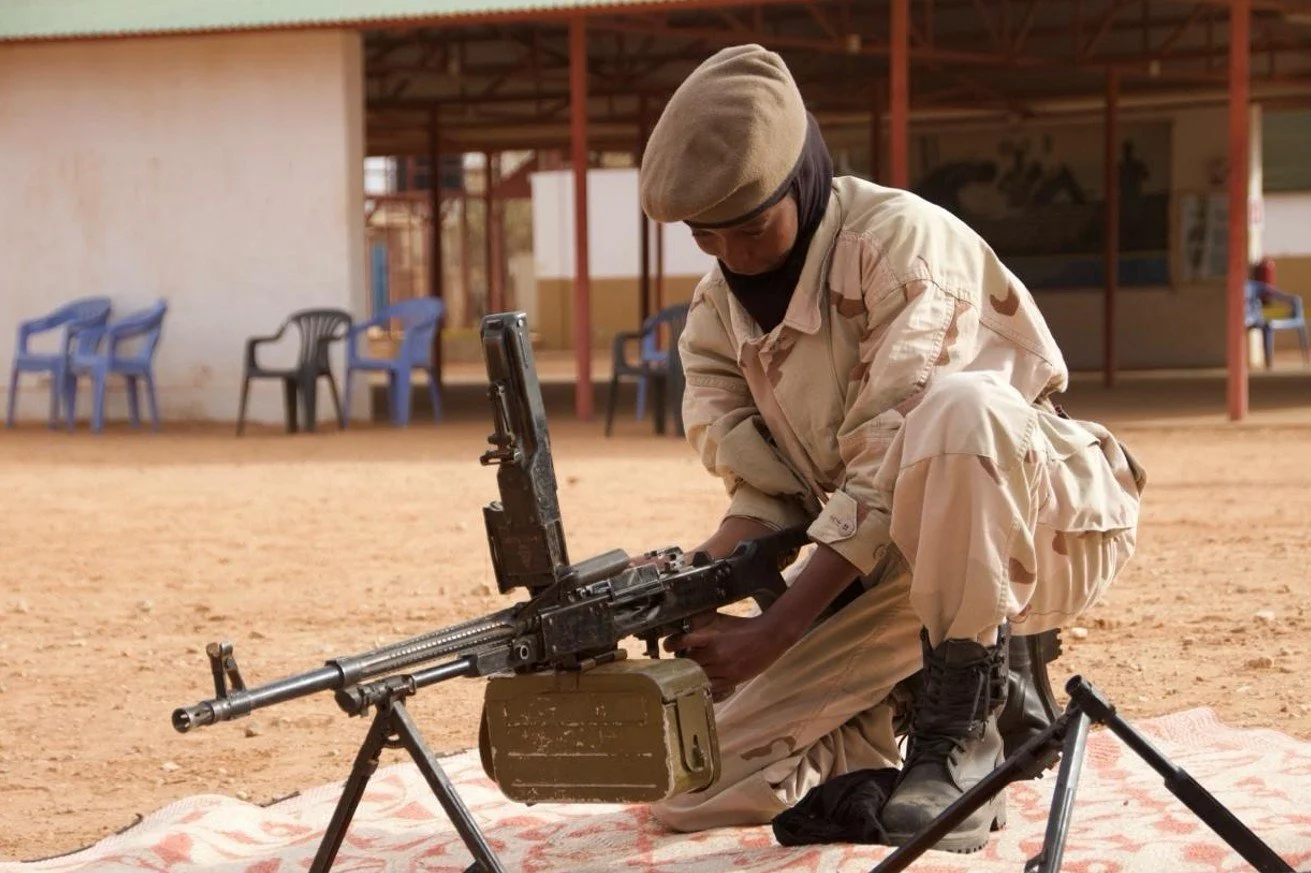
A female Danab Brigade soldier during her basic training graduation ceremony. Source: Louise Liebing
By Louise Liebing
The Cost of Women’s Exclusion in Somalia’s Security Forces
Women and girls suffer disproportionately from decades of armed conflict in Somalia, accounting for 93 percent of reported cases of gender-based violence and 80 percent of the displaced population. [1] Yet, Somali women do not meaningfully participate in the country’s security sector, which means that they are not fully, equally, and effectively involved in the decision-making processes affecting peace and security. [2] Take, for example, the U.S. Government-supported Danab (“Lightning”) Brigade, Somalia’s primary special operations force which has spearheaded offensives against al-Shabaab since 2014. [3] Despite ongoing efforts to diversify Danab, women constituted only 2.3 percent of the Danab Brigade in 2025. Only one woman is currently serving in an officer rank as the brigade headquarters’ chief Civil-Military Cooperation (CIMIC) (S9) officer, the staff section responsible for building relationships with civilian agencies, local authorities, and international organizations. [4]
Women’s underrepresentation stems from multiple factors, especially gender roles based on social stigmas. To illustrate, clan elders see men as protectors, providers, and natural warriors, while they are skeptical of women’s combat value and instead see them as homemakers and child bearers. [5] Family members often discourage their daughters from joining the security forces to protect them from perceptions of indignity and disloyalty to local customs and traditions, which they believe would make it difficult for them to find a husband later. [6] Some donors have encouraged female recruitment through direct agreements with the Federal Government of Somalia that have aimed to increase women’s participation in units such as the U.S.-supported Danab Brigade, the Turkish-trained Gorgor forces, and the Somali police force. [7] Nevertheless, women remain a tiny minority because quotas are difficult to enforce.
Prevalent gender norms, roles, and stereotypes in Somalia prohibit women’s participation in fighting, ascribing the warrior role to men. [8] The resulting gendered division of labor subordinates women to traditionally feminine tasks, despite the fact that female recruits undergo the same selection process as men and are held to the same performance standards during training.[9] The small number of women present in the Somali security forces thus largely fill civilian outreach, medical, intelligence gathering, and administrative roles, often at their unit or headquarters location. In the Danab Brigade, for example, 9 percent of medics are women, which is a higher percentage than in any other specialized role. Meanwhile, women’s inclusion in combat and special units remains minimal. [10]
Finally, women are not meaningfully involved in the decision-making processes in the Somali security forces because their retention is undermined by a combination of structural, cultural, and institutional barriers. Without sustained service, they are unable to attain the seniority or experience required for leadership roles. The forces often lack gender-responsive infrastructure, such as separate accommodation and sanitary facilities at bases and in the field, forcing some female soldiers to return home each night and preventing them from fully participating in operations. Military policies also fail to adequately accommodate family responsibilities, such as pregnancy, childcare, and spousal separation, causing many women to be excluded from recruitment or to leave mid-career. [11] Once Somali women are married, priorities often shift toward childbearing and caregiving; 90 percent of married women do not hold employment. Since 63 percent of Somali women aged 20 to 24 are married, and nearly all are married by age 35, the pool of potential female recruits in the preferred age range is limited. [12]
Women’s Meaningful Participation as a Strategic Imperative
Ensuring women’s meaningful participation in the Somali security forces has several advantages that would improve operational effectiveness, legitimacy, and gender equality both within the security forces and in Somalia writ large. According to studies of United Nations peacekeeping operations, female soldiers have better access to obtain intelligence from local women, can build trust and confidence with local populations, and support the searching and questioning of women during civil-military engagements. [13] These outcomes are achieved because women’s presence helps overcome cultural and gender barriers that often restrict communication and interaction between male soldiers and local women. In turn, women can generate targeted responses for survivors of Sexual and Gender Based Violence (SGBV) through information that could not have been obtained otherwise. They can also improve support for Somali women to alleviate the disproportionate effects of violence, such as displacement and forced or early marriage, on their lives and livelihoods. [14] Female engagement thus presents an opportunity to increase gender equitable responses on the ground and is a crucial capability for frontline troops who are usually the first to engage with local populations after operations, which typically consist of at least 50 percent women because most of the men are participating in the war. [15]
However, justifying women’s meaningful participation should move beyond gender stereotypes by portraying women’s value as bringing additional skills. Solely portraying women “as an operational advantage because of their sexed bodies as women and their ability to engage and communicate with other bodies recognizable as women” will continue their instrumentalization in a way that contributes to gender inequality. [16] Today, women suffer added burdens through additional responsibilities and corresponding expectations carried by them alone. In contrast, male units do not have to prove their added value despite constituting most of Somali security force personnel. For example, female soldiers may successfully build trust and confidence with local populations and extract information that could not have been obtained otherwise, but doing so may require them to increase their workload and bring in personal commitment that goes beyond what is required by their jobs. [17] The added burden carried by female soldiers translates into reduced gender equality - since they have to live up to different, higher expectations than their male counterparts - and a subsequent backlash against women’s inclusion if these expectations are not met. [18]
Moving beyond gender stereotypes, there are multiple reasons why women’s meaningful participation in the Somali security forces enhances operational effectiveness, legitimacy, and gender equality. For recruitment, women present an untapped potential to expand the talent pool for Somali security forces. As of 2024, roughly 21 percent of women in Somalia were employed. [19] While the pool of male recruits may be nearing exhaustion, a significant number of women thus remain available to be recruited and trained as part of the Somali security forces. Based on training performance, men and women can execute the same duties, rendering the preference for men unwarranted. In Danab intake trainings, women already perform equal to or above the average level of their male comrades. The best female graduates excel across all graded disciplines, showing no signs of inferior performance in battle-related categories when compared to subjects such as human rights or medical skills. [20]
Expanding the talent pool can help Danab enhance their operational effectiveness by helping the brigade adapt to new challenges, which include dealing with al-Shabaab’s asymmetric tactics, countering al-Shabaab propaganda, and winning the trust and support of the Somali population. [21] To succeed, Danab requires new technical, communication, and negotiation competencies that a broader and more diverse talent pool can help provide. Diverse and inclusive organizations achieve greater innovation, stronger decision-making, and improved performance by incorporating varied perspectives, fostering collaboration, and promoting psychological safety. [22]
Finally, showcasing competent female soldiers creates role models driving women’s participation in the security forces and overall workforce while countering al-Shabaab’s patriarchal propaganda surrounding sex, morality, and a woman’s place in society. The group portrays women largely as wives and symbols of family honor, insisting they remain veiled, confined to the home, and excluded from decision-making or combat roles. [23] By contrast, Somali security forces that recruit and empower capable female combatants present a powerful alternative model of womanhood, one defined by agency, professionalism, and leadership. This exposes the weaknesses in al-Shabaab’s extremist ideology, undermines its moral legitimacy, and creates female role models who can break gender stereotypes that are detrimental to gender equality and underlying drivers of violence. [24]
Policy Recommendations
Both Somali policymakers and international donors have the tools to strengthen women’s meaningful participation in the Somali security forces. Increasing participation first within the U.S.-supported Danab Brigade is strategic, since Danab serves as a model for other Somali security institutions. The brigade has already led reforms such as electronic pay and multi-clan, merit-based recruitment and promotion, which are now being disseminated across the Somali National Army. Given Danab’s strong operational record and influence, its inclusion of women would set a visible precedent that other units are likely to follow. [25]
The Danab Brigade leadership can challenge prevailing gender norms that exclude women from combat roles by training them in specialized skills directly relevant to Danab’s field operations. While men and women are trained to perform the same tasks, facilitating women’s meaningful participation must take current realities into account, such as the lack of gender-segregated facilities, cultural stereotypes disconnecting women from fighting, and the fact that the women currently joining the force are often among the more highly educated. Training women as Unmanned Aerial Vehicle (UAV) operators could serve as a practical first step toward integration, as it meets an operational need and circumvents some of these logistical and cultural constraints. UAV operations rely less on physical strength and more on technical expertise, concentration, and education, including literacy, technical training, and ideally basic English proficiency. Moreover, UAV operators in Somalia rarely deploy for long periods, as they return to Mogadishu for equipment maintenance. This reduces the logistical challenges posed by inadequate sanitary facilities, privacy, and separate accommodation for women in the field. Their engagement during offensives will enable women’s immediate presence in liberated areas to engage with the local population in a culturally sensitive manner, further helping to dismantle stereotypes about women’s ability to contribute to combat environments. [26]
The Danab Brigade Media Team should expand its outreach by highlighting female role models and sharing the success stories of female combatants on social media. Public awareness campaigns over the diversity of skills needed in the force, living conditions on base and in the field, and success stories of operations may help motivate young women to join and convince their families to be supportive. This approach was successful in Moldova, where the National Army Women’s Association and the Ministry of Defence jointly launched information campaigns to promote women’s recruitment into the armed forces. [27] These efforts should clearly contrast al-Shabaab’s repressive ideology and rigid moral code with the revival of traditional Somali culture, such as poetry, music, and storytelling that celebrates women as agents of change supporting national and cultural unity against al-Shabaab. This approach can inspire more women to join the security forces and counter al-Shabaab’s propaganda. [28]
International donors can support women’s meaningful participation in the Somali security forces by adopting clear recruitment standards and, if necessary, by conditioning international funding on meeting gender parity targets. In the case of Danab specifically, the U.S. Government has implemented strong accountability and oversight mechanisms to prevent human rights abuses and corruption. The brigade further remains integrated into the Somali National Army’s chain of command and the Federal Government of Somalia is increasingly taking over financial and logistical responsibilities, ensuring long-term sustainability and self-reliance. Although the Danab brigade reached its agreed target of recruiting and training 3,000 soldiers in early 2025, the brigade has since lost a significant number through attrition, leaving fewer trained soldiers to carry out Danab’s mission. [29] The United States has a compelling national interest to maintain security engagement in Somalia, as al-Shabaab and the Islamic State remain capable of conducting mass casualty attacks in the region and supporting external operations in nearby friendly countries, Europe, and potentially the U.S. homeland, such as the planned 9/11-style terrorist attack by Cholo Abdi Abdullah directed by al-Shabaab leaders. [30] Continued support to the Danab Brigade, which the U.S. Government itself has hailed as a “capable, professional, and accountable force” built on “the success of…joint efforts” is a low-cost opportunity to mitigate this threat. [31]
Enhancing women’s meaningful participation in the Danab Brigade is possible if the U.S. Government decides to fund upcoming recruitment drives based on the reasons outlined above. Specifically, the U.S. could continue funding the standard number of recruits for screening and training. On top of that baseline, the U.S. would fund an extra 20 percent of slots specifically for women. If Somali authorities do not put forward qualified female candidates, they simply lose access to those additional positions, not any of their original ones. This reframes women’s participation as an opportunity to increase total trained force strength, creating a strong incentive for Somali leaders to present female candidates in order to maximize the overall combat capacity returning to their regions. This approach differs from traditional quota systems and avoids their usual pitfalls by ensuring that women are framed as additional recruits rather than replacements for men. [32] Similarly, recruitment strategies should offer bridging programs, such as literacy, technical, physical, and leadership training to expand eligibility for recruitment. For example, in 2023, the Danab Brigade implemented a literacy program to enable participation by illiterate candidates who had previously been neglected during the recruitment process. [33]
Conclusion
Somali and international stakeholders should work together to institutionalize the meaningful participation of women in the Somali security forces as a strategic priority. Starting this process with the Danab Brigade would set a precedent for the broader Somali National Army to follow. The Danab Brigade leadership can challenge prevailing gender norms that exclude women from combat roles by training them in specialized skills directly relevant to Danab’s field operations and using the Danab Media Team to highlight female role models and success stories that counter al-Shabaab’s patriarchal propaganda. The U.S. Government should fund upcoming Danab recruitment drives to include additional slots reserved for women, framing women’s participation as an expansion of overall security capacity rather than a substitution of men, and expanding literacy and technical bridging programs during recruitment. Such programming is strategically essential, as women’s meaningful participation enhances Danab’s operational effectiveness, strengthens community relations, and heightens legitimacy.
About the author
Louise Liebing is the Monitoring and Reporting Manager for Bancroft Global Development in Somalia. Her work focuses on advancing human rights, literacy, and women’s participation in the Danab Brigade. This article is based on the author’s professional engagement with the Somali National Army (SNA)- Danab Brigade from July 2022 – October 2025. All information was obtained through legitimate, authorized access to organizational data. The article represents the independent research and views of the author.
Endnotes
[1] United Nations Population Fund, “Overview of Gender-Based Violence Situation in Somalia,” 9 April, 2022, 7, https://somalia.unfpa.org/sites/default/files/pub-pdf/somalia_gbv_advocacy_brief_09april22.pdf; European Union Agency for Asylum, “Somalia: Country Focus,” May 2025, pp. 38-39, https://euaa.europa.eu/coi/somalia/2025/country-focus/coi-report-somalia-country-focus.
[2] UN Women Africa, “Somalia,” United Nations, accessed October 15, 2025, https://africa.unwomen.org/en/where-we-are/eastern-and-southern-africa/somalia.
[3] Paul D. Williams, “The Somali National Army Versus al-Shabaab: A Net Assessment,” CTC Sentinel 17, no. 4, April 2024, pp. 35-43, https://ctc.westpoint.edu/wp-content/uploads/2024/04/CTC-SENTINEL-042024_article-4.pdf.
[4] Danab Brigade Headquarters, Personnel Records (Mogadishu: internal data reviewed by author, October 2025).
[5] Rift Valley Institute, Nairobi Forum: “War on Men” Meeting Report, 26 July 2013 (Rift Valley Institute, 2018), pp. 1-2, https://riftvalley.net/wp-content/uploads/2018/06/RVI-Nairobi-Forum-War-on-Men-Meeting-Report-26-July-2013_0.pdf.
[6] Hassan Hussein Abdi, “Contribution and challenges of integrating women into police reform in Somaliland,” South Florida Journal of Development 5, no. 11, November 2024, pp. 1-15, https://doi.org/10.46932/sfjdv5n11-002.
[7] U.S. Embassy in Somalia, “U.S. Trains Danab on Civilian Protection,” August 3, 2025, https://so.usembassy.gov/u-s-trains-danab-on-civilian-protection/; Hiiraan Online, “Somalia graduates first female officers from Türkiye’s TURKSOM military academy,” Hiiraan Online, September 4, 2025, https://www.hiiraan.com/news4/2025/Sept/202788/somalia_graduates_first_female_officers_from_türkiye_s_turksom_military_academy.aspx; Mohammed Dhaysane, “1st Batch of Turkey-Trained Female Somali Commandos Arrive in Mogadishu,” Anadolu Agency, September 1, 2021, https://www.aa.com.tr/en/africa/1st-batch-of-turkey-trained-female-somali-commandos-arrive-in-mogadishu/2352964.
[8] International Crisis Group, “Women and Al-Shabaab’s Insurgency”, Crisis Group Africa Briefing No. 145, 27 June, 2019, https://www.crisisgroup.org/africa/somalia/b145-women-and-al-shabaabs-insurgency.
[9] Author’s field research, Mogadishu, February 2025.
[10] Danab Brigade Headquarters, Personnel Records (Mogadishu: internal data reviewed by author, August 2025).
[11] Author’s field research, Mogadishu, February 2025.
[12] Somalia National Bureau of Statistics, Federal Government of Somalia. The Somali Health and Demographic Survey 2020, p. 56, p. 72, https://nbs.gov.so/wp-content/uploads/2023/07/Somali-Health-Demographic-Survey-2020.pdf.
[13] United Nations Peacekeeping, “Women in Peacekeeping”, United Nations, accessed October 9, 2025, https://peacekeeping.un.org/en/women-peacekeeping
[14] Stacey Schamber and Melinda Holmes, Agents of Change: Transforming Gender Roles and Extremism in Somalia (Washington, DC: International Civil Society Action Network, October 2021), pp. 5–6, https://icanpeacework.org/wp-content/uploads/2024/08/ICAN_Gender-and-Extremisms-Case-Study-Somalia-2021_EN.pdf.
[15] Author’s field research, Mogadishu, February 2025.
[16] Synne L. Dyvik, “Women as Practitioners and Targets: Gender and Counterinsurgency in Afghanistan,” International Feminist Journal of Politics 16, no. 3, 2014, pp. 410-429, https://doi.org/10.1080/14616742.2013.779139.
[17] Nina Wilén, “Female Peacekeepers’ Added Burden,” International Affairs 96, no. 6, 2020, pp. 1585–1602; Dyvik, ‘Women as Practitioners and Targets,’ p. 421.
[18] Nina Wilén, “Female Peacekeepers’ Added Burden,”.
[19] World Bank, “Somalia: Gender Data Portal,” World Bank, accessed October 16, 2025, https://genderdata.worldbank.org/en/economies/somalia.
[20] Author’s field research, Mogadishu, February 2025.
[21] United Nations Assistance Mission in Somalia, “Countering al-Shabaab Propaganda and Recruitment Mechanisms in South Central Somalia,” 14 August, 2024, p. 24, https://unsom.unmissions.org/sites/default/files/countering_al-shabaab_propaganda_and_recruitment_mechanisms_report_final_-_14_august_2017_0.pdf.
[22] Miller, Jason, “The Power of Diversity and Inclusion: Driving Innovation and Success,” 16 August, 2023, https://www.forbes.com/councils/forbesbusinesscouncil/2023/08/16/the-power-of-diversity-and-inclusion-driving-innovation-and-success/.
[23] International Crisis Group, “Women and Al-Shabaab’s Insurgency”, Crisis Group Africa Briefing No. 145, 27 June, 2019, https://www.crisisgroup.org/africa/somalia/b145-women-and-al-shabaabs-insurgency.
[24] Nina Wilén, “Female Peacekeepers’ Added Burden,”.
[25] Author’s field research, Mogadishu, February 2025.
[26] Ibid.
[27] United Nations, “Towards Equal Opportunity for Women in the Defense Sector,” 16 October, 2024, p. 7, https://www.un.org/ssr/sites/www.un.org.ssr/files/general/dpo_women_in_defence_web.pdf.
[28] United Nations Assistance Mission in Somalia, “Countering al-Shabaab Propaganda and Recruitment Mechanisms in South Central Somalia,” 14 August, 2024, p. 24, https://unsom.unmissions.org/sites/default/files/countering_al-shabaab_propaganda_and_recruitment_mechanisms_report_final_-_14_august_2017_0.pdf.
[29] Author’s field research, Mogadishu, February 2025.
[30] U.S. Department of Justice, “Kenyan National Indicted for Conspiring to Hijack Aircraft on Behalf of Al-Qaeda-Affiliated Terrorist,” December 16, 2020, https://www.justice.gov/archives/opa/pr/kenyan-national-indicted-conspiring-hijack-aircraft-behalf-al-qaeda-affiliated-terrorist.
[31] U.S. Embassy in Somalia, “United States Increases Security Assistance through Construction of SNA Bases,” February 16, 2024, https://so.usembassy.gov/united-states-increases-security-assistance-through-construction-of-sna-bases/.
[32] Author’s field research, Mogadishu, February 2025.
[33] Ibid.
Disclaimer
The views expressed in this paper are solely those of the author and do not reflect the opinions of the editors or the journal.