The Erosion of Mutual Vulnerability: Conventional Counterforce and the Transformation of Deterrence (Volume 21, Issue 2)
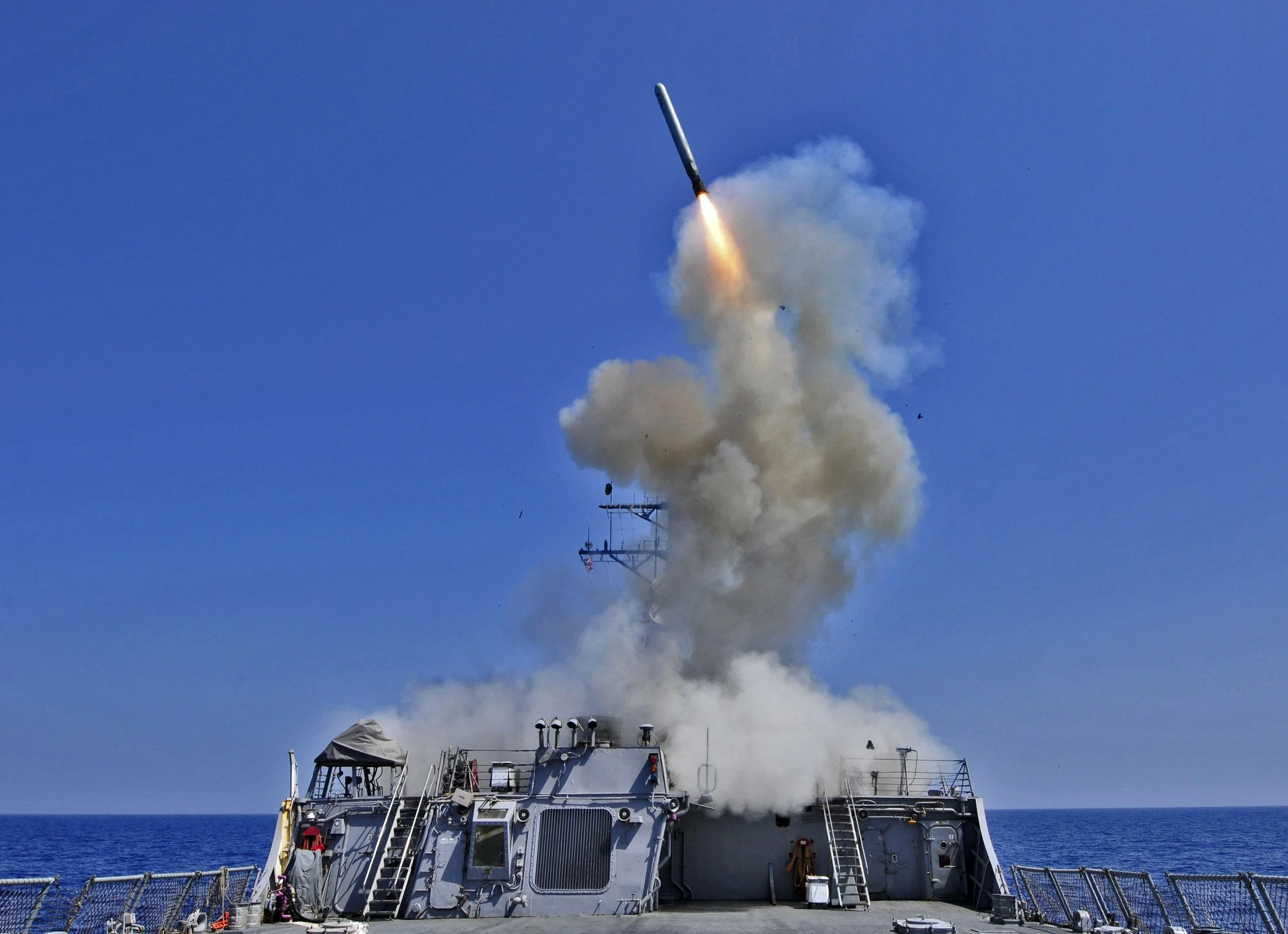
U.S. Navy photo by Petty Officer 3rd Class Jonathan Sunderman. Source: Creative Commons, DVIDSHUB.
By Manuel Galileo
For decades, strategic stability among nuclear powers rested on a simple premise: no state could eliminate a peer rival’s retaliatory second-strike capability without suffering unacceptable destruction in return. Mutually assured destruction depended on confidence in survivability. That confidence is now eroding as advanced non-nuclear strike capabilities increasingly undermine the survivability assumptions that underpin deterrence theory.
A quiet revolution in long-range conventional counterforce—the use of non-nuclear weapons to target an adversary’s nuclear forces and supporting infrastructure—has emerged through the integration of precision strike systems, high-fidelity surveillance, advances in submarine detection, and layered ballistic missile defense. [1] Modern systems now possess the range, accuracy, and lethality to threaten hardened nuclear silos and detect road-mobile launchers. [2] Even if a single conventional missile cannot fully destroy a nuclear silo, repeated strikes could induce structural failure by exploiting overpressure thresholds, effectively incapacitating it. [3]
Precision strike systems such as Tomahawk and JASSM-ER, alongside palletized air-launched delivery systems like Rapid Dragon, expand options for standoff strikes. If leaders believe that portions of their nuclear forces could be degraded by precision conventional strikes before launch, they may face “use-it-or-lose-it” pressures during crises. [4] While states plan against capabilities, perceived vulnerability can destabilize as much as actual vulnerability. [5]
In parallel, advances in boost-phase and midcourse missile defense architectures, including Aegis Ashore and Aegis Afloat, affect deterrence by reducing the credibility of assured second strike. [6] Historically, missile defense capabilities have propelled adversaries to expand and diversify their arsenals to overwhelm or circumvent defensive layers. This includes increasing warhead numbers, deploying multiple independently targetable reentry vehicles (MIRVs), or turning to alternative delivery systems like drones to saturate defensive layers. Individually, conventional counterforce and ballistic missile defense erode the logic of mutual vulnerability. Taken together, they compress the margin of survivability on which nuclear deterrence has long depended.
This transformation coincides with a deteriorating arms control environment and renewed nuclear expansion by several powers, including China and Russia. [7] Meanwhile, bilateral agreements such as the expired New START hang in limbo, and multilateral arms control forums, including the Non-Proliferation Treaty, have entered a period of institutional fragmentation. [8] The result is a self-reinforcing cycle: as arms control constraints erode, states invest in survivability, counterforce, and missile defense to offset uncertainty. Yet, these deployments intensify threat perceptions, making future arms control agreements increasingly harder to uphold.
Three-Body Problem Deterrence
In a tripartite dynamic involving the United States, China, and Russia, classical bipolar deterrence models no longer apply. [9] China’s rapid arsenal expansion and Russia’s continued nuclear and conventional modernization are often framed as departures from “minimum deterrence.” [10] However, Beijing and Moscow characterize their initiatives as responses to an evolving strategic landscape in which the boundary between nuclear and non-nuclear coercion is increasingly blurred. [11] Debates surrounding U.S. homeland defense initiatives—particularly “Golden Dome”—further complicates this dynamic. Golden Dome has been framed as a limited and layered initiative intended to supplement deterrence rather than replace it. However, in a tripolar dynamic, adversaries need not interpret defensive initiatives through the same lens. Even partial improvements in detection and interception may be perceived as incremental efforts to reduce vulnerability over time. This raises a deeper question: whether mutual vulnerability remains widely accepted as a stabilizing feature of nuclear competition, or whether major powers are increasingly seeking to mitigate it by progressively blurring offensive and defensive capabilities.
If strategists believe their second-strike forces are increasingly exposed to conventional counterforce, rational responses may include expanding arsenal size, diversifying delivery systems, dispersing forces, or lowering launch thresholds. None of these responses enhance stability; instead, they significantly heighten crisis instability. [12] Skeptics may argue that hardened silos, submarine survivability, and force redundancy still preserve credible second-strike capability. Yet, deterrence depends not on technical certainty alone, but on confidence in survivability under worst-case assumptions. The fundamental transformation, therefore, lies less in proven disarmament capability than in altered perceptions of survivability. [13]
The most dangerous feature of this ongoing erosion of mutual vulnerability is entanglement, as conventional and nuclear systems increasingly share platforms, sensors, command networks, and early-warning infrastructures. In a crisis, a conventional strike on military infrastructure may appear indistinguishable in its early stages from preparations for a nuclear first strike. Consider a Taiwan contingency. If the United States were to conduct non-kinetic disruption operations or precision conventional strikes against elements of the People’s Liberation Army Rocket Force command-and-control architecture to degrade China’s conventional missile strike capability, Beijing could interpret such actions as the opening phase of a broader counterforce campaign against its nuclear deterrent. [14] This risk is heightened by the partial overlap between China’s conventional and nuclear missile forces, which rely on shared command networks and early-warning systems. [15] In a regional crisis involving three nuclear powers in close proximity, entanglement between conventional and nuclear capabilities could therefore amplify the risk of misinterpretation. [16]
Weakened Arms Control Guardrails
Existing arms control frameworks were negotiated in an era when strategic stability was measured primarily by deployed nuclear warheads and delivery systems. Long-range conventional systems were once treated as peripheral because their technological maturity was limited. [17] That distinction has eroded. As these capabilities become more precise, survivable, and lethal, they strain the assumption of mutual vulnerability that underpins classical arms control logic. Yet the erosion of mutual vulnerability does not necessarily make war inevitable. It does, however, narrow the margin for error. As Schelling observed, deterrence depends less on weapons than on the expectations they create. When arms control guardrails weaken, those expectations become less stable. [18]
Ultimately, addressing the erosion of mutual vulnerability under low expectations requires first acknowledging the strategic implications of conventional counterforce capabilities. Renewed arms control dialogue among major powers may appear unlikely in the near term; yet, even at the height of the Cold War, when the risk of nuclear annihilation was far more immediate, there were successful arms control efforts. A pragmatic starting point, therefore, is to reopen a serious debate on the strategic implications of these emerging conventional capabilities.
About the author
Manuel Galileo is a foreign policy and military analyst, track II diplomat with British Pugwash, and Fellow and Associate Tutor in International Relations and International Security at the London School of Economics and Political Science and SOAS University of London. His research on emerging conventional counterforce and U.S.–Russia–China strategic stability has been presented at the United Nations in Geneva and New York and cited in international media including The Guardian, The Sun, and the South China Morning Post. Trained in Civil Engineering, diplomacy, and International Relations, he brings interdisciplinary expertise and field experience spanning large-scale infrastructure development, arms control, and global security.
Endnotes
[1] Clayton Swope, “No Place to Hide: A Look into China’s Geosynchronous Surveillance Capabilities,” Center for Strategic and International Studies (CSIS), 2024, https://www.csis.org/analysis/no-place-hide-look-chinas-geosynchronous-surveillance-capabilities; Steve Balestrieri, "Is the Stealth Submarine Era Over?” National Security Journal, 2025, https://nationalsecurityjournal.org/is-the-stealth-submarine-era-over/; Ronald O’Rourke, “Navy Aegis Ballistic Missile Defense (BMD) Program: Background and Issues for Congress,” Congressional Research Service, 2023, https://s3.documentcloud.org/documents/23794580/rl33745-3.pdf.
[2] Ryan Snyder, “Assessing the Lethality of Conventional Weapons against Strategic Missile Silos in the United States, Russia, and China,” Science & Global Security 32, no. 1-3, 2024, pp. 105-173, https://scienceandglobalsecurity.org/archive/sgs32snyder.pdf; Hans Kristensen and Matt Korda, “Monitoring Nuclear Weapons Developments with Open Source Intelligence,” in Open Source Investigations in the Age of Google, ed. by Henrietta Wilson, Olamide Samuel, and Dan Plesch (London: World Scientific Publishing, 2024), pp. 66-86, https://doi.org/10.1142/9781800614079_0004.
[3] Snyder, “Assessing the Lethality,” pp. 105-173.
[4] George Moore, “Rapid Dragon: the US military game-changer that could affect conventional and nuclear strategy and arms control negotiations,” Bulletin of the Atomic Scientists, August 4, 2023, https://thebulletin.org/2023/08/rapid-dragon-the-us-military-game-changer-that-could-affect-conventional-and-nuclear-strategy-and-arms-control-negotiations/; Julia Macdonald and Mark Bell, “How to Think About Nuclear Crises,” Texas National Security Review, 2019, http://dx.doi.org/10.26153/tsw/1944.
[5] Robert Jervis, Perception and Misperception in International Politics (Princeton: Princeton University Press, 1976).
[6] Center for Strategic and International Studies Missile Defense Project, “Aegis,” 2021, https://missilethreat.csis.org/system/aegis/; Center for Strategic and International Studies Missile Defense Project, “Aegis Ashore,” 2021, https://missilethreat.csis.org/defsys/aegis-ashore/.
[7] Hans Kristensen, Matt Korda, Eliana Johns, Mackenzie Knight-Boyle, and Kate Kohn, “Status of World Nuclear Forces,” Federation of American Scientists, March 26, 2025, https://fas.org/initiative/status-world-nuclear-forces/.
[8] Eric Edelman and Franklin Miller, “No New START Renewing the U.S.-Russian Deal Won’t Solve Today’s Nuclear Dilemmas,” Foreign Affairs, June 3, 2025, https://www.foreignaffairs.com/united-states/no-new-start; Mette Eilstrup-Sangiovanni, “The Instability of the Nuclear Nonproliferation Regime Complex,” Review of International Political Economy 30, no. 6, 2023, pp. 2094-2121, https://doi.org/10.1080/09692290.2023.2238732.
[9] Charles Glaser, “The Security Dilemma Revisited,” World Politics 50, no. 1, October 1997, pp. 171-201, https://www.jstor.org/stable/25054031.
[10] Hans Kristensen, Matt Korda, Eliana Johns, and Mackenzie Knight, “Chinese Nuclear Weapons,” Bulletin of the Atomic Scientists 81, no. 2, 2025, pp. 135-160, https://doi.org/10.1080/00963402.2025.2467011; Hans Kristensen, Matt Korda, Eliana Johns, and Mackenzie Knight, “Russian Nuclear Weapons,” Bulletin of the Atomic Scientists 81, no. 3, 2025, pp. 208-237, https://doi.org/10.1080/00963402.2025.2494386; Philip Pilkington, “Rethinking Deterrence and Defense for the Twenty-First Century,” American Affairs, November 20, 2025, https://americanaffairsjournal.org/2025/11/rethinking-deterrence-and-defense-for-the-twenty-first-century/.
[11] Nathan Beauchamp-Mustafaga, “Don’t Let Chinese Fears of a U.S. Decapitation Strike Lead to Nuclear War,” Foreign Policy, October 7, 2025, https://foreignpolicy.com/2025/10/07/china-war-nuclear-risk-beijing-decapitation-strikes/; Brandon Frederick, Matthew Povlock, Stephen Watts, Miranda Priebe, and Edward Geis, “Assessing Russian Reactions to U.S. and NATO Posture Enhancements,” RAND Corporation Report RR-1879, 2017, https://www.rand.org/content/dam/rand/pubs/research_reports/RR1800/RR1879/RAND_RR1879.pdf.
[12] Tytti Erästö, “Revisiting ‘Minimal Nuclear Deterrence’: Laying the Ground for Multilateral Nuclear Disarmament,” Stockholm International Peace Research Institute, SIPRI Insights on Peace and Security no. 2022/6, 2022, https://www.sipri.org/sites/default/files/2022-06/sipriinsight2206_minimal_nuclear_deterrence_0.pdf.
[13] Keir Lieber and Daryl Press, “The New Era of Counterforce: Technological Change and the Future of Nuclear Deterrence,” International Security 41, no. 4, Spring 2017, pp. 9-49, https://doi.org/10.1162/ISEC_a_00273.
[14] Henrik Stålhane Hiim, M. Taylor Fravel, and Magnus Langset Trøan, “The Dynamics of an Entangled Security Dilemma: China's Changing Nuclear Posture,” International Security 47, no. 4, 2023, pp. 147-187, https://doi.org/10.1162/isec_a_00457.
[15] Caitlin Talmadge, “Would China Go Nuclear? Assessing the Risk of Chinese Nuclear Escalation in a Conventional War with the United States,” International Security 41, no. 4, Spring 2017, pp. 50-92, https://direct.mit.edu/isec/article-abstract/41/4/50/12156/Would-China-Go-Nuclear-Assessing-the-Risk-of.
[16] Michael T. Klare, “Emerging Military Technologies and Nuclear (In)Stability,” Arms Control Association, 2021, https://www.armscontrol.org/sites/default/files/files/Reports/ACA_Report_EmergingTech_digital.pdf.
[17] Amy Woolf, “The Past and Future of Bilateral Nuclear Arms Control,” United Nations Institute for Disarmament Research, Geneva, 2023, https://unidir.org/publication/the-past-and-future-of-bilateral-nuclear-arms-control/.
[18] Thomas Schelling, The Strategy of Conflict (Cambridge, MA: Harvard University Press, 1960).
Disclaimer
The views expressed in this paper are solely those of the author and do not reflect the opinions of the editors or the journal.